Does land size matter?
Updated: 21 hours ago
Should you buy a small block of land in a great location or a bigger block further out?
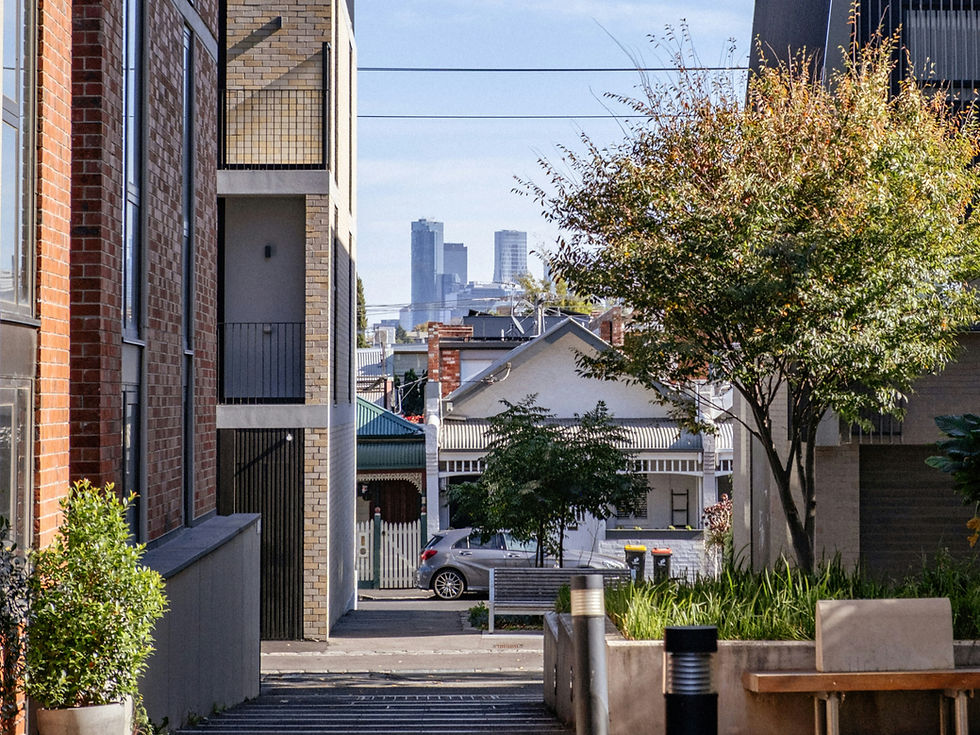
It's one of the most persistent misconceptions in property: that a bigger land size automatically means better capital growth. Where you're comparing two properties on the same street with the same orientation, the property with the bigger land size will usually be valued higher (provided there are no encumbrances or other physical detractors). But the moment you're choosing between a bigger block in one location and a smaller block in another, chasing land size alone is one of the easiest ways to make a costly mistake.
In Episode 125 of The Property Trio, David Johnston, Cate Bakos and Peter Koulizos unpack why land size on its own is the wrong thing to focus on, and work through orientation, corner blocks and the land to asset ratio along the way.
Where did the idea that bigger land size is better come from?
The great Australian dream, a quarter-acre block with a Hills Hoist clothesline in the backyard and mowing the lawn on Sundays, made land size the aspirational measure of family living for decades. That's no longer the reality driving capital growth. Suburbs close to the city, where less wealthy households historically lived on much smaller blocks, are now some of the most sought-after pockets in the country.
Magazines and seminars have reinforced the misconception, creating hype around big land size and subdivision potential and convincing people that more land automatically means more wealth. In practice, location carries far more weight than land size. A smaller block closer to the city will typically be worth more than a bigger block on the fringe, where there are hundreds of near-identical houses today, and another few hundred going up next year.
Land size vs land value: what actually drives price
Land size isn't what determines value, land value per square metre is. Think of it like Christmas morning: a child would rather have the giant Santa sack stuffed with things from the reject shop, because there's more of it, when the smaller Tiffany box is actually worth far more.
If a block is too small, too unworkable or too quirky, land size can start to work against it, and it may not have the same capital growth prospects as the land around it. It's a similar logic to asking whether, with $1 million to spend, you should buy one property or two. Buying two usually means buying units, which typically carry weaker capital growth prospects than a single, well-located house and land. A block that's twice the size of another isn't automatically worth twice as much.
This is where understanding your land to asset ratio becomes useful: it's the same principle applied as a practical framework, focusing on land value per square metre rather than raw land size.
When does land size actually matter?
If you're planning a renovation or development, land size does matter, and it should be weighed carefully alongside planning regulations. Targeting blocks purely for their future development potential is risky if you're not seriously planning to develop soon; you can't assume a block's land size will still suit development years down the track, and planning approvals typically only last twelve months before they lapse.
Orientation matters too, independent of land size. A north-facing backyard delivers the best sunlight throughout the day, followed by east, then west, then south. That said, a clever dwelling design can still maximise natural light even without an ideal orientation, so a lesser aspect isn't automatically a dealbreaker.
Corner blocks and land size: blessing or curse?
Corner blocks come with set-backs that eat into usable space relative to their land size, while the block next door may be able to build right up to the boundary. Bedrooms facing a footpath, with the noise and foot traffic that comes with it, are a common reason buyers give corner blocks a wide berth.
But a corner block can also be a genuine asset. Where you have backyard access or a crossover for vehicle access (subject to council approval), you may be able to add a roller door and drive straight in, which can save driveway space and remove the need for shared access. Unless you have real plans to develop, though, a corner block isn't inherently a positive just because of its land size; it depends entirely on what you intend to do with it.
Smaller land size in inner-ring locations is the norm
Some buyers, particularly newer arrivals to the market, are less comfortable putting money into an older property on a smaller land size, preferring the certainty of more land and fewer planning overlays. But unless you're genuinely committed to becoming a developer, there's little value in targeting a property purely for its long-range development potential.
If development is genuinely on your radar, the more effective approach is to buy, obtain your planning approvals, and act on them within the window before they lapse. Having a land size meaningfully bigger than your neighbours', or the ability to buy next door or behind, is where genuine opportunity exists. Outside of that kind of unique scenario, buying a bigger block simply for its land size rarely creates anything that outperforms from a development standpoint.
House and land, outer-ring fringe, and land banking
Buyers chasing capital growth by purchasing brand new house and land often run into trouble, because land size isn't the issue, land value is; the majority of the price tag sits in the depreciating dwelling rather than the appreciating land. Even a smaller land size can carry a higher land to asset ratio than a larger one, depending on the land value per square metre relative to the dwelling and any capital improvements.
In fringe suburbs and new land releases, land value per square metre is typically low regardless of land size, which is part of why these areas often work against long-term capital growth. We've covered this in more detail in our piece on the hidden risks of house and land packages and off-the-plan purchases. It's also possible to go too far the other way, buying more land size than you need attached to a compromised dwelling, where the cost of fixing it up eats into your yield.
The Property Trio's gold nuggets
Cate Bakos, The Property Buyer's golden nugget
For investors optimising capital growth on a fixed budget, don't compromise on location or site quality just to get more land size. Ask yourself: would you rather see a huge present under the Christmas tree, or the small box?
Peter Koulizos, The Property Professor's golden nugget
Value isn't just about land size, it's also about frontage. Two similar houses side by side, but the one with more frontage generally carries more development potential and a higher value. When valuing land, weigh up size, frontage, orientation, corner position, overlays, and other restrictions such as flooding or flight paths.
Listen to the full conversation
For the complete discussion, including how the trio approach land size versus land value in their own buying decisions, listen to Episode 125 below.
Need a hand?
If you're trying to work out whether land size actually matters for the property you're considering, or want a second opinion on a block before you commit, reach out to us.
Our property planning service is built around exactly this kind of decision.
Understanding land size, land value per square metre, orientation and development potential can be complex, and getting it wrong can significantly affect your capital growth. Our support, service and advice is ongoing and continues throughout your property journey.


